Recap: Coachella 2026 Prediction Markets
From headliner leaks to weekend-two weather, here's how Coachella and California festival season show up on Kalshi and Polymarket.
Polymarket US · Deposit $10 get a $25 Trading Bonus!
21+ · T&Cs apply
18+ Only. Restrictions and eligibility requirements apply. Not available in all jurisdictions. Trading is risky. 100% loss can occur. See polymarket.com/tos for more information. The Polymarket US App serves as an independent software provider and affiliate of Polymarket US and Polymarket Clearing, the CFTC-regulated exchange and clearing organization.
Quick answer
Californians can trade culture-market contracts tied to Coachella and other in-state festivals on Polymarket and, increasingly, Kalshi — covering things like headliner announcements, surprise-guest appearances, weekend weather, and related music-chart or awards outcomes. These are structured as yes/no event contracts, not wagers with a house-set line.
Polymarket US · Deposit $10 get a $25 Trading Bonus!
VENICE
Claim on Polymarket US (opens in a new tab)
18+ Only. Restrictions and eligibility requirements apply. Not available in all jurisdictions. Trading is risky. 100% loss can occur. See polymarket.com/tos for more information. The Polymarket US App serves as an independent software provider and affiliate of Polymarket US and Polymarket Clearing, the CFTC-regulated exchange and clearing organization.
Last checked October 21, 2026
Key takeaways
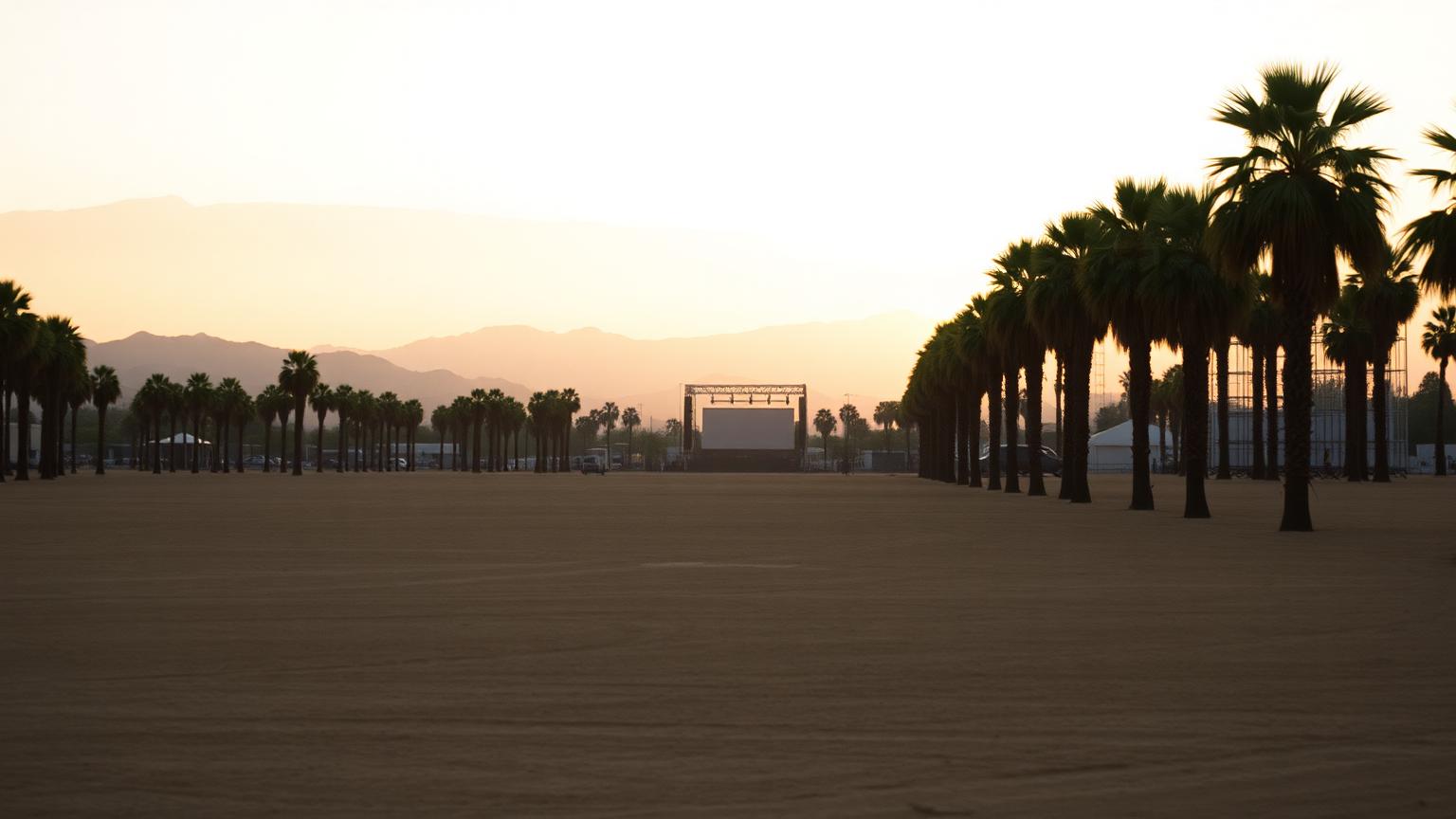
- Coachella happens every April in Indio, in the Colorado Desert east of Palm Springs, across two consecutive weekends.
- Polymarket has run culture markets on festival headliners, surprise guests, and related music-industry outcomes.
- Kalshi has been expanding into entertainment and culture contracts as CFTC-regulated event markets grow.
- Weather-outcome contracts are a natural fit for outdoor festivals like Coachella, Stagecoach, Outside Lands, and BottleRock.
- Always check a market's exact resolution criteria and source before trading — culture markets can hinge on ambiguous wording.
Recap: Coachella 2026 took place at the Empire Polo Club in Indio over two weekends, April 10–12 and April 17–19, 2026 (Wikipedia (opens in a new tab)). This guide was written before the festival, so its prices are from then. For current markets, see entertainment and pop-culture markets.
California's festival calendar is one of the most-watched in the world, and where there's a widely anticipated cultural event with an uncertain outcome, prediction markets tend to follow. Coachella, held every April on the Empire Polo Club grounds in Indio, is the marquee example — but it's part of a broader in-state circuit that includes Stagecoach (country music, same grounds, the following weekend), Outside Lands in San Francisco's Golden Gate Park, and BottleRock in Napa.
What kinds of Coachella markets actually exist
Culture and entertainment markets on platforms like Polymarket have historically covered things adjacent to major festivals: who will headline, whether a rumored surprise guest will appear, whether an artist will announce a specific project during their set, or how a festival performance affects an artist's chart position afterward. Kalshi, whose contract lineup as a CFTC-regulated exchange has broadened over time, has moved into entertainment and culture territory as well, alongside its core political and economic contracts.
Typical market types you might see
- Headliner and lineup markets — will a specific rumored artist be confirmed for the bill?
- Surprise guest markets — will Artist X join Artist Y onstage during their set?
- Weather markets — will Indio hit a specific temperature threshold during festival weekend, relevant given the desert heat?
- Chart and streaming markets — will a festival performance push a song into the Billboard or Spotify top spots the following week?
- Adjacent awards markets — Grammy and other award-nomination contracts that sometimes overlap with festival buzz cycles.
How the contracts actually work
These are structured as event contracts: a market asks a specific yes/no question with a defined resolution date and source (e.g., official festival lineup announcement, Billboard chart data, or a named news outlet). You buy a "yes" or "no" position at a price reflecting the market's current implied probability, and if the event resolves the way you predicted, your contract settles at full value. If you're wrong, it settles at zero. Prices move continuously as new information — lineup leaks, ticket sales, social media buzz — shifts trader sentiment.
This is meaningfully different from a fantasy-style prediction game: you're taking a real financial position priced by the market, not entering a contest with a prize pool. That's also why resolution criteria matter so much — always read exactly how and when a market resolves before you trade it.
| Festival | Location | Typical Timing | Common Market Themes |
|---|---|---|---|
| Coachella | Indio (Empire Polo Club) | April, two weekends | Headliners, surprise guests, desert heat |
| Stagecoach | Indio (same grounds) | Late April | Country lineup, crossover guest appearances |
| Outside Lands | Golden Gate Park, SF | August | Fog/weather, headliner sets |
| BottleRock | Napa | May | Lineup, wine-country weather |
How to approach trading festival markets
Culture markets can be thinner and more volatile than major political or sports contracts, since fewer traders participate and information can be rumor-driven. A few practical habits help: track official festival social accounts and reputable music trade press (Variety, Billboard, Pitchfork) rather than unverified leak accounts; check a market's exact resolution source before entering a position; and size positions conservatively given the higher noise-to-signal ratio in celebrity and lineup speculation compared to, say, election or economic contracts.
Where to find these markets
Polymarket has generally led on pop-culture and entertainment contract variety, given its historical focus on culture and internet-native events. Kalshi's entertainment category has been growing as the platform expands beyond its original economics and politics focus. Both are accessible to California residents; check each platform's current app and market listings, since culture-market availability shifts with the news cycle and each festival's lead-up.
Bottom line
Coachella and California's festival season have become a genuine niche within prediction markets — lower stakes and more culture-driven than election night, but built on the same core mechanics. If you're already following the lineup rumor mill every spring, trading these contracts is a natural extension, as long as you treat resolution criteria and market thinness with the same care you'd apply to any other contract.
$25 Kalshi bonus with code VENICEClaim (opens in a new tab)Last reviewed by Catie Di Stefano on September 29, 2026. We re-verify market prices, polling, and citations on every update.
Sources & references
- Commodity Futures Trading Commission — Event Contracts (opens in a new tab) — CFTC.gov
- Kalshi wins court battle to offer election contracts (opens in a new tab) — Reuters
- Prediction markets coverage (opens in a new tab) — Wall Street Journal
External links open in a new tab. We cite primary regulatory and major news sources where possible. Citations to trusted regulators (CFTC, SEC, IRS, NOAA, .gov, .edu) are dofollow; commercial outbound links are not endorsements.
Frequently asked questions
Can I legally trade Coachella-related markets in California?
Where is Coachella held?
Are these markets the same as celebrity gossip betting sites?
Do festival markets resolve quickly?
What other California events have similar markets?
21+ · T&Cs apply · Terms
18+ Only. Restrictions and eligibility requirements apply. Not available in all jurisdictions. Trading is risky. 100% loss can occur. See polymarket.com/tos for more information. The Polymarket US App serves as an independent software provider and affiliate of Polymarket US and Polymarket Clearing, the CFTC-regulated exchange and clearing organization.


